
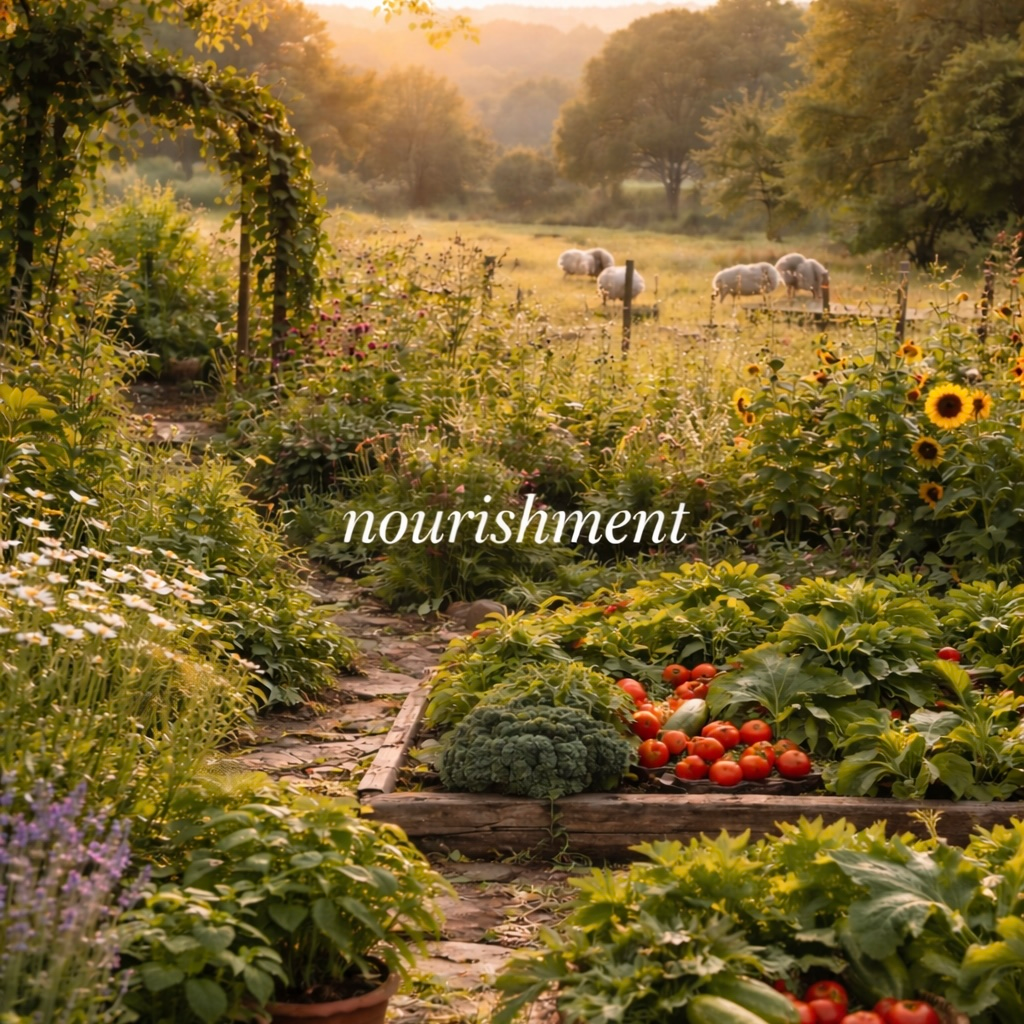
Intentional cooking is not just about what we prepare, but how we arrive in the kitchen. It is a way to nourish your entire being by combining wholesome ingredients and intention.
When cooking is guided by season, meals become more than sustenance. They foster deep connection to the land that grows our food and to the people we gather around the table, allowing food to become a bridge between body, home, and spirit.
Holistic Rituals for Everyday and Seasonal Consciousness
Living intentionally does not require grand gestures or perfectly kept routines. For me, it has taken shape through small, repeated rituals — daily, monthly, and seasonal — that gently guide me in the direction of nourishment, reflection, and grounding. Food weaves through all of them, anchoring the spiritual in the physical and reminding me that self-care begins in the kitchen.
Daily Rituals: Grounding the Ordinary
My days are held together by a few simple practices that return me to myself.
Whenever I find a quiet moment in the day, I journal. Gratitude often finds its way onto the page through a warm cup of tea and a moment of reflection. Writing slows me down enough to listen to myself, and stay present with time as it passes.
Movement is another form of listening. Some days it looks like yoga; other days, a ten-minute stretch to release what the body has been holding. These moments are less about discipline and more about presence — meeting myself where I am.
And in the evening, no matter how busy the day has been, I try to cook dinner at home. The act itself is grounding: chopping seasonal vegetables, stirring a pot, tasting and adjusting. Cooking becomes a daily ritual of return — a way to close the day with intention and nourishment.
Weekly Rituals: Shabbat as Sacred Pause

Shabbat is not something I do so much as something I prepare for. As the week draws to a close, there is a quiet turning inward: tidying the home, cooking in advance, setting the table. These acts are not about perfection, but about readiness — creating space to receive rest each week.
Food is central to this rhythm. Cooking for Shabbat is intentional and unhurried, rooted in care rather than efficiency. The meals are nourishing and familiar, meant to be shared and savored. In this way, the kitchen becomes a place of devotion, where preparation itself is a spiritual practice.
When the candles are lit, time feels different. The urgency of the week softens. There is permission to stop striving, to be present, to simply dwell. Shabbat offers a weekly reminder that rest is not a reward, but a necessity — and that sanctifying time begins at home.
Through Shabbat, nourishment expands beyond the physical. It becomes communal, spiritual, and deeply grounding.
Full Moon Rituals: Reset and Release

The full moon has become a monthly moment to check in, clear space, and realign.
I begin by opening the windows, letting fresh air move through the home. This simple gesture signals that something is shifting.
I make tea — often ginger honey and lemon — and sit down with a notebook. As I drink, I record my gratitude for blessings of the past month and set intentions for the month ahead, writing what I hope to cultivate. Then comes the release: I write down what no longer serves me — habits, fears and patterns. I tear the paper and throw it away. The act is small, but essential. Letting go becomes something I can feel.
A seasonal soup usually follows. I gravitate toward warming, grounding meals on full moon nights; meals filled with seasonal vegetables and nutritious grains like barley, quinoa and couscous. Nourishment becomes part of the reset too.
I end my night with a shower as a cleansing ritual — imagining water carrying away what I’ve named and released.
Seasonal Rituals: Living With the Cycle

The seasons shape not only what grows, but how I move through the world. Marking the solstices and equinoxes helps me stay oriented — returning to the Earth’s natural rhythm as a source of grounding and guidance.
Each season carries its own energy: a beginning, a fullness, a turning point, a quiet return. Through ritual, reflection, and food, I’ve learned to meet these shifts with excitement rather than resistance.
In Seasonal Rituals for Intentional Living and Nourishment, I share how I welcome each season in detail. How nourishment, both physical and spiritual, becomes a way of tasting the moment I am in.
A Living Practice
These rituals are not rigid or prescriptive. They shift as life shifts. What matters is not doing them “right,” but centering intention and presence in nourishment. My little rituals contribute to big changes in my physical and spiritual health.